 Posted by
 The best retail is both an experience and a system.
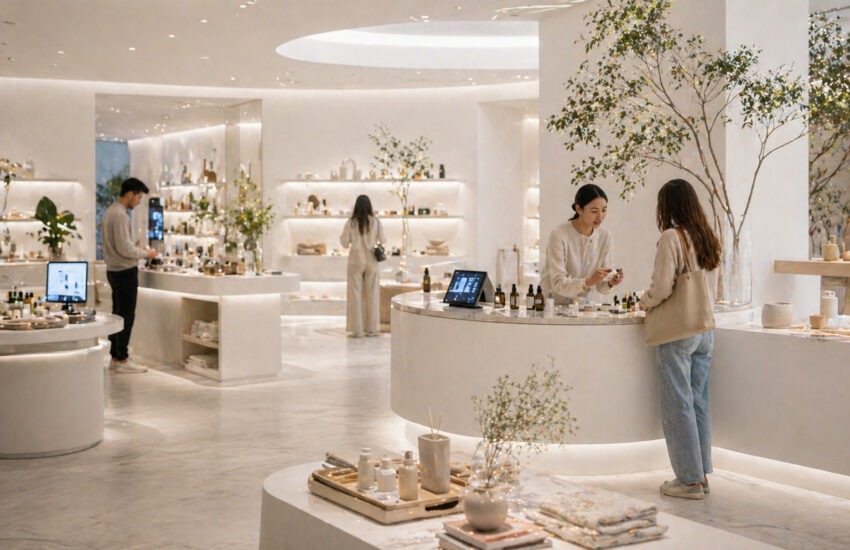
So when you read a headline like, ‘We visited San Francisco’s AI-run store so you don’t have to’, you need to take a deep breath and recognize that most stories like this are really not about a store (or any other business) being run by AI. At least not in the way it’s being presented. It’s almost irresistible to imagine this boutique shop in San Francisco, run by an AI named Luna that chooses products, sets prices, hires staff, manages vendors and customers can pick up a phone in the store to talk to it. The AI has a lease… a corporate card… Internet access and a mandate to operate like a business.
It sounds like some kind of future for retail.
But the more you think about it, the more it starts to feel like something else entirely. What this AI-meets-physical retail experiment is actually doing is exposing a split that’s been forming for a long time, it’s the difference between retail as a system and retail as an experience. If retail is just inventory, pricing, procurement, scheduling, payments, answering questions… AI is going to get very good at it. Faster than most people expect (it may even be there already). It can optimize supply chains, adjust prices in real time, manage vendors, predict demand, reduce waste and smooth out the operational friction that has always made retail messy. That part is not controversial. That part is just software… technology driven by optimization. I would argue that retail has never just been a system (in fact, most businesses). A great store is not defined by how efficiently it moves product. It’s defined by how it makes people feel. There’s taste… curation… the strange, hard-to-quantify layer of judgment that shows up when someone helps you find something you didn’t know you were looking for. The way a staff member reads the room… the moment when a conversation turns into trust… maybe, even, a relationship.
Those things don’t sit neatly inside a dashboard… and that’s where this experiment gets interesting.
Because Luna may be “running” the store… but the humans are still doing a lot of the heavy lifting when it comes to making the store feel like a place worth being in. The humans still greet customers… restock shelves… manage awkward interactions. They smooth over the parts that don’t quite work. They make the environment feel normal… human… safe. Which raises a much more important question than whether AI can run a store. What does it actually mean to run a business If AI can handle the operational layer… the part that is repetitive, administrative, reporting… and increasingly automatable, then the role of the human doesn’t disappear… it shifts… and amplifies. Less time managing systems and reporting and much more time shaping experiences. Less time on logistics… more time on judgment, taste, and connection.
That’s the version of this story that feels optimistically human.
The one where AI becomes an invisible layer that removes friction and gives people more room to be human. The small business owner who finally has help with inventory, scheduling, pricing and vendor management… and can focus on building something that actually feels distinct. The employee who spends less time on tasks behind the cash and more time on people.
That’s a meaningful upgrade.
But there’s another version of this story running in parallel (and closer to the headlines). The one where companies look at this and don’t see an opportunity to elevate the human experience… they see an opportunity to remove humans from the equation. Where the question becomes “how many roles can we eliminate?” instead of “how much better can we make this?” That’s where things start to break (and in retail… it can be crushing). A store can be perfectly optimized and still feel empty. It can run flawlessly and still have no soul. It can be fast, cheap and frictionless… and still not give you a reason to come back. The operational layer can improve dramatically… while the experiential layer either whimpers or roars.
And that erosion is hard to see in the moment… because the metrics still look good.
So we double down on optimization. And then we look up one day and realize everything feels the same. Andon Market is interesting because it forces this tension into the real world. It takes something that has mostly lived in demos, slides and speculative conversations about the future… and puts it in a physical space where people can walk in, look around, interact, and feel what it’s like. And what it reveals is not that AI is ready to replace retail. It reveals that retail itself has always been two different things at once. A system that can be optimized and an experience that has to be felt. So this isn’t about whether AI can run a store… it’s about whether we’ll use it to build stores that feel more human… or whether we’ll quietly design the human out of the experience in the name of efficiency… and call that progress.
That feels a lot more like a vending machines than a store to me.
PS… I’ll speaking at NRF Nexus in Colorado Springs on July 22-24 please join me for my keynote: Finding Retail’s Rhythm in the Algorithm.
This is what Elias Makos and I discussed on CJAD 800 AM.
Before you go… ThinkersOne is a new way for organizations to buy bite-sized and personalized thought leadership video content (live and recorded) from the best Thinkers in the world. If you’re looking to add excitement and big smarts to your meetings, corporate events, company off-sites, “lunch & learns” and beyond, check it out.
 Never another podcast episode or article