 Posted by
I may not be as good at what I do as I thought I was.
For 167 years, the Riemann hypothesis has challenged some of the world’s greatest mathematical minds. It was one of those seemingly impossible problems that generations of brilliant people dedicated their lives to solving. Then Levent Alpöge (a mathematician working at Anthropic), announced that he and his trusted sidekick Claude had found a proof. 17 million lines of lean computer code. Independent formal verification has supported the proof’s correctness, but mathematicians are still working to understand what it all means. In a world where our attention is more focused on someone in a leather jacket than on one of the biggest breakthroughs in mathematics, we might all need a little pause to really reflect on what’s happening in math. Because if it’s happening there… it’s happening here (whatever your “here” is). Something that challenged humanity for more than a century and a half may have been solved with AI…
We’re now trying to catch up to the discovery… while also claiming that AI is not creative, inventive… or capable of outthinking us meatbags.
If you still think AI is just a productivity tool… you’re already very far behind. The technology is currently accomplishing things that even our most exceptional human minds couldn’t. Math bores you? How about reports that unreleased but existing AI models may posses mathematical breakthroughs that threaten the encryption systems we depend on every day? In my keynote presentations, I tell leaders that they don’t want to be an abacus in a calculator world. The question isn’t whether AI can increasingly do what we do today (it can). The question is what kind of person, employee or leader becomes more valuable because of it? The non-motivational side of that question runs deep… were we actually exceptional at what we did… or simply capable in a world where the technology didn’t exist to do it better?
Remember that before electronic computers, humans were employed as computers.
Literally… that was a job title. They performed extraordinarily complicated calculations. They were highly skilled, highly trained and essential to the work. Then technology changed what being good at that work meant. It didn’t erase their accomplishments, but it fundamentally changed how we valued their expertise. How much of our work today faces a similar reckoning… I don’t think any of us know.
Prose & poetry…
This is how I am thinking about the work that we do. Think about how much time we spend writing emails, preparing reports, summarizing meetings, formatting presentations and figuring out how to communicate something clearly. That’s much of the prose of our professional lives. AI now does much of this work (often better and in far less time than I ever could… and I, sincerely, thought I was pretty great at these tasks). As AI started doing more and more of this work for me, I noticed something. When I write you an email, I’m thinking about you… what matters to you… our relationship… what I’m hoping to accomplish. There’s value in that thinking that goes well beyond the words. But if AI takes care of the writing, am I also outsourcing some of that thinking? And if I get that time and intellectual energy back, how do I redirect it toward the poetry? Imagining possibilities of how we should work together… connecting ideas… understanding the relationship… asking questions we wouldn’t previously have considered. And, yes (as I think about it), AI may become extraordinarily capable at poetry, too.
So… what are we humans trying to protect… and what might we become if we stopped protecting it?
Some mathematicians see these developments as devastating… others see an extraordinary opportunity. Both reactions make sense today. Imagine spending your career becoming exceptional at something, only to discover that the definition of exceptional has fundamentally changed. We’re telling people to develop a growth mindset… learn new skills… reinvent themselves. But towards what? We don’t necessarily know which capabilities will matter next, which professions will emerge or what meaningful expertise might look like in a world where AI can make discoveries we’re still struggling to understand.
That’s the uncertainty… and it’s real.
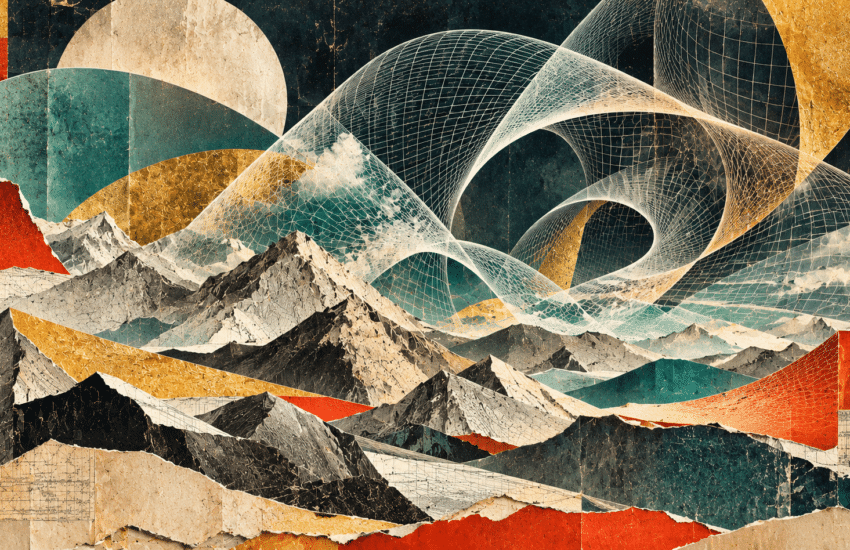
I keep coming back to something Martin Bridson, a mathematician at Oxford University, said… “…the struggle to wrestle human understanding from the machines’ formalities will unleash greater ambition for what we can achieve (working with AI agents) in this new era of mathematics. Some of our favorite mountains have been conquered, but behind them are bigger mountains that we can tackle with new equipment.” I love that thinking. Not because it makes the uncertainty disappear (and don’t confuse uncertainty with destruction), but because it reframes what’s possible. Agency still matters… ambition will matter more. There will be people who see AI as the technology that makes their expertise useless… and there will be people who recognize that the same technology might make ambitions they never imagined possible.
Neither group knows precisely what comes next.
To riff on what Bridson was thinking… we’ve become so focused on climbing the mountains we already know that we’ve forgotten to imagine what might be waiting beyond them…
What bigger mountains will you tackle with this new equipment?
This (and some other topics) is what we discussed on CJAD 800 AM this week.
 Never another podcast episode or article