 Posted by
 Am I getting old?
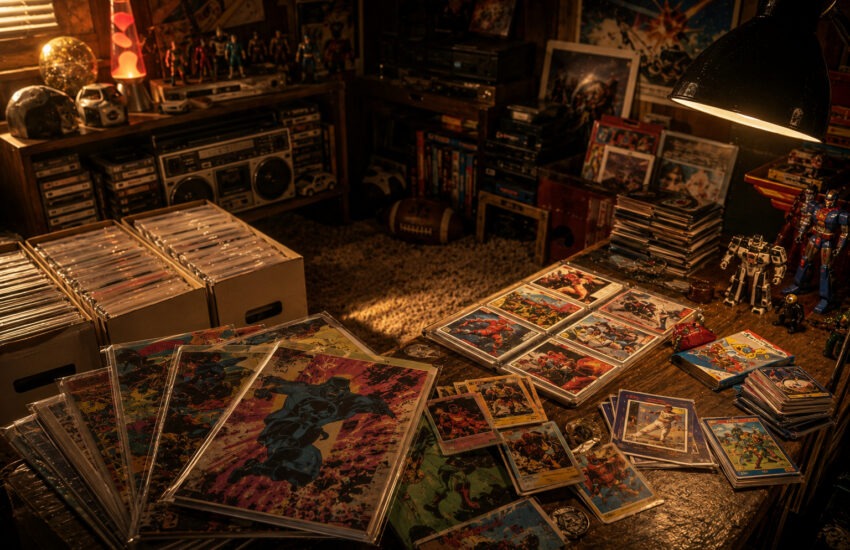
Lately, I’ve been on this strange kick of not wanting to own much of anything. Even the things I used to collect now seem somewhat troublesome or burdensome. What’s stranger is that I still love looking at a lot of this stuff… mostly from a nostalgic perspective. Just the other week I was wandering the aisles at a local ComicCon and realized it had been quite some time since I had bought anything. Mostly because the comic books I already have are now bagged and boarded and sitting in boxes, and while I used to love owning them… now I am not entirely sure what purpose they serve. I get the warmest, fuzziest feeling from simply seeing a lot of this stuff… but that doesn’t mean I want to own it anymore.
I’ve been thinking a lot about ownership and consumer behavior lately…
Maybe it’s because so much of what we used to own has quietly become something we access? My massive vinyl, cassette and CD collection became Spotify. All those VHS tapes and DVDs became Netflix. Software became SaaS (and wow, is that ever expensive for something I don’t own). My beautiful bookshelves are still there, but I read almost exclusively on my Kindle. Photos became clouds. A lot of the culture we used to hold in our hands became something we rent from platforms that can change the price, remove the title, alter the interface or make the thing disappear entirely… and it’s also access to the entire library… so the curation has shifted as well. And, because we now have access to the entire library, curation has shifted as well.
Access is easier… cleaner… lighter.
It removes clutter, friction and the low-grade domestic shame of realizing your basement has become a museum of your quirky little mind (also, if you ever happen to find me unconscious on the street, please delete my playlists and tell no one what you saw!). But maybe convenience solved one problem while creating another?
That’s what I kept thinking while editing my conversation with Doug Woodham on this week’s episode of Thinking With Mitch Joel.
Doug is the former President of the Americas at Christie’s, an economist, a longtime art obsessive and the author of Jean-Michel Basquiat – The Making Of An Icon. We were talking about art, collecting, scarcity, status and why human beings still feel this strange pull toward possession… even in a world where almost everything can be copied, streamed, searched, saved, shared or subscribed to. And I kept thinking about my own comic books. The long boxes… the hunt… the satisfaction of finding something. The bizarre emotional logic of owning what is, to anyone outside of the culture, basically expensive paper. At some point, every collector probably has the same uncomfortable moment. You look at the thing you had to have… and realize you barely look at it anymore.
So what was the wanting really about… and why does this matter to business leaders today?
In many categories, ownership now feels inefficient… almost silly… until it doesn’t. Some things still feel different when they are owned. A movie on Netflix is content… but a Criterion disc on a shelf is a statement. A book on Kindle is useful… but a marked-up copy with cracked pages and a coffee stain feels like something entirely different.
Access gives us the thing… ownership gives the thing weight.
Maybe that’s why collecting has not disappeared… it has become more selective and more emotionally loaded. Drops, limited editions, collabs and treasure hunts are everywhere. People buy vinyl in the age of streaming. Sneakers still sell out in seconds. Watches, guitars, comics, art prints, signed books, vintage toys, luxury bags and old concert shirts have moved beyond collectibles into art (wines and cigars too). They do something access can’t quite do… they become identity anchors.
That’s the business lesson here.
Scarcity used to be discovered. Now it is engineered. Drops, limited editions, numbered prints, treasure hunts, secondary markets, waitlists, grading systems and even unboxing videos have become part of the product experience itself. Brands have figured out that the hunt can be more powerful than the object. The feeling of almost missing out can be more valuable than the thing being sold. But logically, we know this has limits. If everything is rare, nothing is rare. If every brand manufactures scarcity, consumers eventually start to feel the machinery behind the magic. The emotional charge only works when the object still means something. Otherwise, scarcity is just a tactic wearing a velvet rope. The more I think about it, the more I wonder if the future of ownership is not about having more things… but about noticing which things still have the power to make access feel insufficient.
In a culture where we can access almost anything… what is still worth owning… that’s what I’m noodling on about.
Before you go… ThinkersOne is a new way for organizations to buy bite-sized and personalized thought leadership video content (live and recorded) from the best Thinkers in the world. If you’re looking to add excitement and big smarts to your meetings, corporate events, company off-sites, “lunch & learns” and beyond, check it out.
 Never another podcast episode or article